

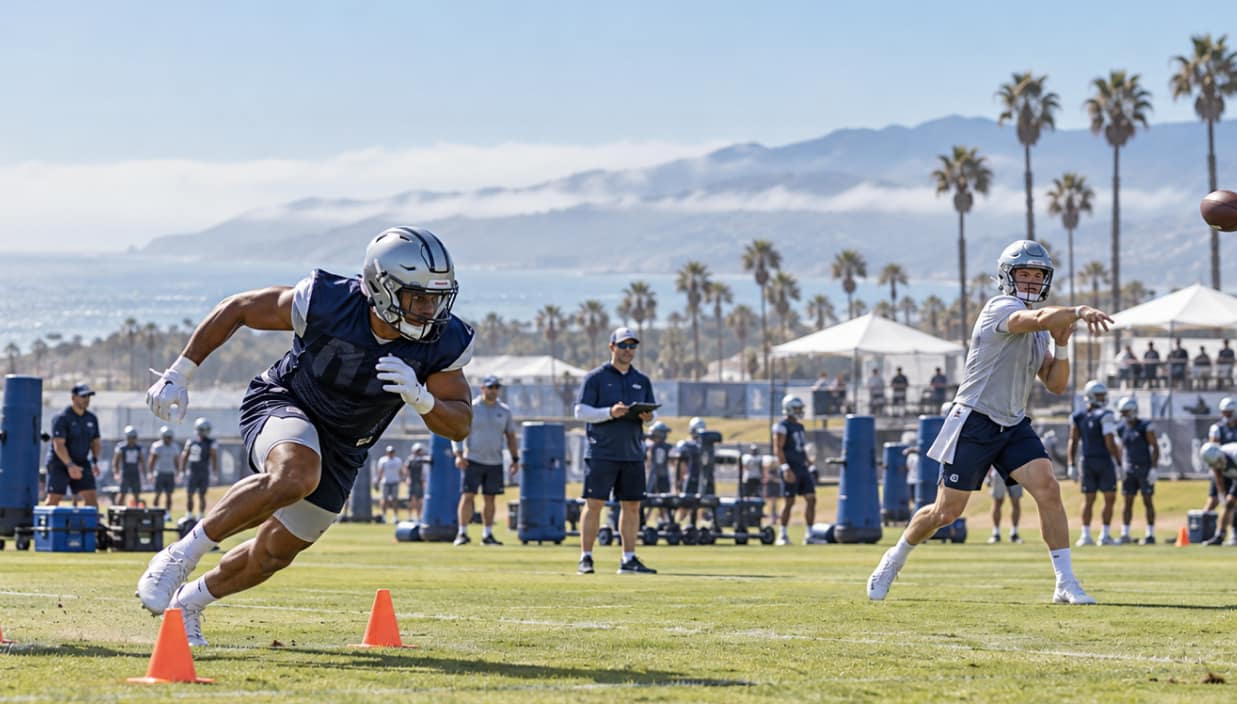
Cowboys Player Development was one of the clearest themes from the Dallas Cowboys’ early training camp work in Oxnard, California, based on coordinator comments reported on August 5, 2026. Defensive coordinator Christian Parker pointed to DeMarvion Overshown’s progress with green-dot communication, rookie linebacker Jaishawn Barham’s physical tone, and quick learning from Caleb Downs and Malachi Lawrence, while offensive coordinator Klayton Adams described Jaydon Blue as much more consistent during 2026 camp practices FOX 4 Dallas-Fort Worth.
Because today is September 8, 2026, those Oxnard comments now sit as an early-camp checkpoint rather than a preview. The details still matter for a Dallas audience because they showed what the Cowboys were prioritizing at the start of their preparation period: communication, physicality, position competition, and daily consistency. Those are not slogans. They are developmental markers that can be tracked from the first padded work through roster decisions and role definition.
Cowboys Player Development In Oxnard
Why Cowboys Player Development Starts With Communication
Overshown’s green-dot work was the most direct player-growth signal from Parker’s August 5 comments. The green-dot defender relays defensive calls, which makes the role more than a volume assignment. It requires command, timing, and trust from the coaching staff. Parker said Overshown had done well relaying those calls and had accelerated his grasp of positional communication and scheme fundamentals.
For a defense trying to reset its standard, that detail carries weight. A talented linebacker can run, hit, and flash in practice, but a player handling call communication has to bring order before the snap. In local terms, this is the type of camp note Dallas fans should treat as more than a nice practice review. It suggests the staff was testing whether Overshown could connect athletic ability with operational responsibility.
That is why Cowboys Player Development in Oxnard should be read through function, not just highlights. A camp interception or a hard collision can stand out on video, but a defender who communicates correctly across personnel groups affects everyone lined up around him. Parker’s comments made Overshown’s development sound tied to defensive structure rather than only individual improvement.
Barham’s Physical Tone Showed Early
Parker also praised rookie inside linebacker Jaishawn Barham, saying the physicality and demeanor the Cowboys expected from him was “coming to life” in Oxnard. That matters because linebacker development is often measured in how quickly a player’s college traits survive against NFL speed, spacing, and blocking angles.
The Cowboys did not need Barham to be described as a finished product on August 5. The stronger takeaway was that the trait profile the staff valued had started to appear in practice. Physicality in camp can be hard to evaluate without overstating contact periods, but a coordinator noting demeanor gives the observation a coaching context. It points to repeatable behavior: how a player approaches drills, fits, contact, and competition.
Defensive Growth Started With Communication
Rookies Had To Shorten The Learning Curve
Beyond Overshown and Barham, Parker noted that Caleb Downs and Malachi Lawrence were proving to be quick learners while adjusting to NFL pace and scheme demands. That part of the report is especially relevant to player development because rookies are rarely judged only by what they know on arrival. They are judged by how fast they can correct mistakes, retain coaching, and apply the same instruction in a faster practice environment.
For Dallas, that early learning curve had a practical team purpose. Parker was leading a defense trying to improve after giving up 511 points in the 2025 season, the most in the NFL that year and the most in Cowboys history, with emphasis placed on fundamentals, technique, and physical play FOX 4 Dallas-Fort Worth. That number frames why the coaching staff’s language in Oxnard focused less on buzz and more on habits.
A defense coming off that kind of scoring total cannot fix itself through one rookie, one veteran, or one camp period. It has to improve through alignment, communication, tackling detail, and role clarity. The early praise for Downs and Lawrence should be viewed inside that wider repair project. Quick learning is valuable because it allows coaches to install, adjust, and compete without slowing every rep for the newest players.
Competition Was Most Visible At Linebacker And Defensive Back
The reported early-camp energy included players battling for position, especially in the defensive back and linebacker units under Parker’s direction. That is where camp development becomes a pressure test. Young players can look comfortable in individual work, then reveal where they stand once the staff increases tempo and competition.
For North Texas fans who follow every roster layer, those position groups were worth extra attention because defensive communication often begins in the middle and back end. Linebackers and defensive backs have to pass route alerts, formation checks, and coverage responsibilities across the field. If the Cowboys were going to rebuild defensive confidence, these were natural areas to stress early.
Cowboys Player Development during those practices was not limited to rookies. The research notes also point to veterans anchoring leadership and detail work while newcomers were pushed to close the gap. That mix is central to camp evaluation. A rookie learning quickly still needs veterans to define the daily standard. A veteran holding a standard still benefits when rookies create competition behind him.
Offensive Standards Put Consistency On Tape
Jaydon Blue’s Progress Was Framed By Reliability
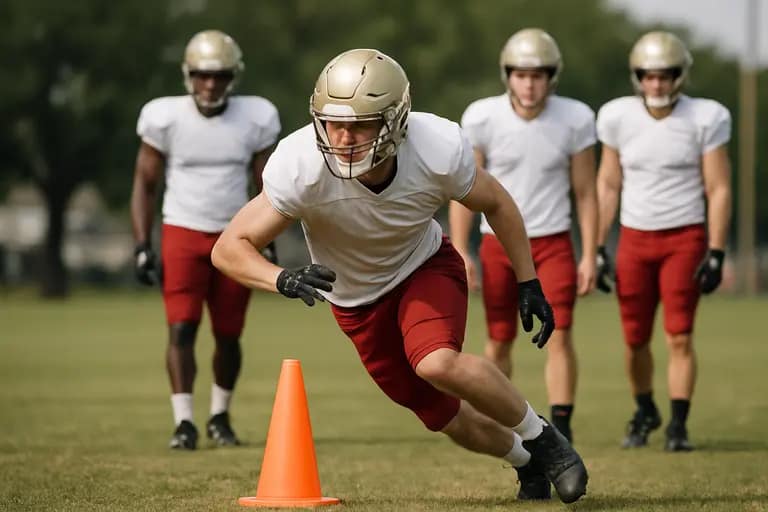
On offense, Adams’ comments about Jaydon Blue stood out because they focused on consistency. After inconsistency in Blue’s rookie year, Adams said Blue had been much more consistent during 2026 camp practices as of early August. That is a meaningful developmental marker because coaches often decide offensive roles through trust as much as talent.
Consistency can include assignment accuracy, tempo, ball security, route detail, protection work, and practice-to-practice reliability. The available reporting does not provide snap counts, drill grades, or specific plays, so it would be wrong to build a statistical case that is not supported. The verified point is narrower but still useful: Adams saw a more consistent version of Blue than the one tied to his rookie-year ups and downs.
That type of improvement can matter in a Cowboys offense where role competition is public and highly scrutinized. Dallas fans often focus on the explosive play first, but offensive staffs tend to reward the player who keeps the operation on schedule. Blue’s early-camp note belonged in that category.
Dak Prescott’s GOTI Standard Set The Practice Bar
Adams also referenced the offensive standard known as “GOTI,” short for “Greatest Offense There Is,” a phrase coined by Dak Prescott. Adams said that standard applied every moment in practice. The value of that phrase depends on how it is enforced. If it becomes a daily demand for alignment, effort, timing, and execution, it can shape behavior. If it remains only a phrase, it loses weight quickly.
The August 5 reporting presented it as part of the Cowboys’ offensive practice identity. That makes it relevant to development, especially for players trying to earn or expand roles. A standard repeated by the quarterback and reinforced by the coordinator can give younger players a clearer picture of what counts as a winning rep.
Cowboys Player Development on offense, then, was less about one dramatic camp performance and more about whether players could meet the same expectation across repeated work. Blue’s consistency note fits that theme. So does the idea that every practice moment carried a standard, not only the competitive periods that draw the most attention.
What Cowboys Player Development Means After August 5
Why The Early Notes Still Matter In Dallas
The Cowboys’ early Oxnard practices took place away from North Texas, but the meaning of those practices came back to Dallas. The fan base has lived through years when training camp optimism was not enough, so the useful question is not whether the August 5 comments sounded positive. The better question is which comments pointed to skills that can survive beyond camp.
Overshown relaying defensive calls is one of those skills. Barham showing the expected physicality and demeanor is another. Downs and Lawrence learning quickly matters because mental processing often separates players once the preseason pace rises. Blue becoming more consistent matters because offensive coaches need reliable options, not only flashes.
The most grounded reading is that the Cowboys’ staff used early August to define what development had to look like: communication on defense, technique after a damaging 2025 scoring total, physical competition at linebacker and defensive back, and a daily offensive standard tied to Prescott’s GOTI phrase. None of those facts guarantee role changes or season-long success. They do, however, show what the coaches were measuring before the public scoreboard became the main reference point.
For a Dallas sports community that tracks player growth from camp drills to game-day snaps, that is the lasting value of the August 5 report. It gave names, traits, and standards to watch: Overshown’s command, Barham’s edge, rookie learning from Downs and Lawrence, Blue’s reliability, and a team-wide push to turn practice language into repeatable football.