

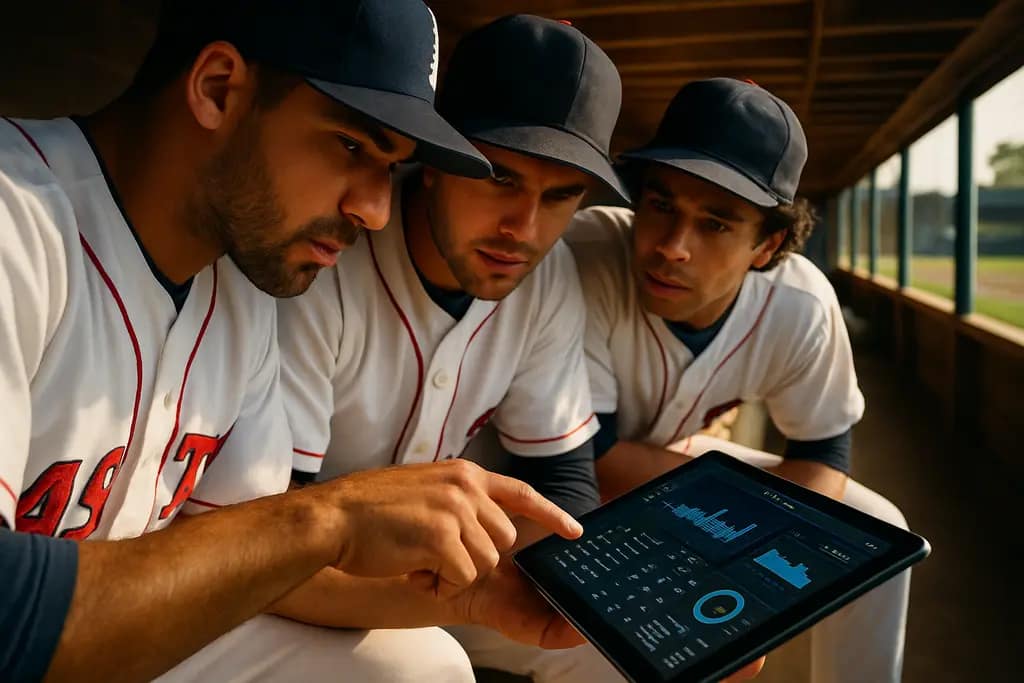
Texas Baseball Analytics has moved from a support function into a visible part of how college programs in the state evaluate players, prepare for opponents and manage games. The shift is clearest at Texas A&M and Texas, but it reaches beyond the state’s biggest athletic departments into conference statistics, student jobs and smaller program staffing. For Texas baseball communities, the larger point is not that data replaces coaches. It is that data now helps define how coaches explain performance, how players develop, and how programs connect local talent to college opportunity.
Texas Baseball Analytics Moves From Back Room To Dugout
Texas A&M provides the cleanest verified example of analytics becoming part of the baseball staff structure. Jack Mahala has served as the Aggies’ Director of Research & Development since the 2024 season, and his work has included machine-learning models for player evaluation and strategy, according to his official Texas A&M staff profile. That same profile credits the 2024 Aggies with ranking in the top 10 nationally in 11 different categories, setting program records in home runs and walks, leading the SEC with a 3.86 ERA, and finishing fourth in the country.
Those numbers do not prove that one staff position created every result. College baseball performance still depends on recruiting, player health, coaching, schedule strength and execution. But the connection matters because Texas A&M has put an analytics title inside the baseball operation rather than treating data as a side project. In a state where college baseball success carries recruiting and community weight, that staffing choice signals to players and high school coaches that data work is now part of the development conversation.
How Texas Baseball Analytics Shows Up In Games
Texas Baseball Analytics is most useful when it turns information into decisions that players can actually use. For hitters, that can mean identifying attack zones, swing decisions and how power translates across matchups. For pitchers, it can mean shaping plans around strike throwing, pitch mix and count control. Texas A&M’s 2025 staff ranked among the nation’s elite in five pitching categories, including ERA and WHIP, and finished second nationally in walks allowed per nine innings and third in strikeout-to-walk ratio. Those pitching markers fit the kind of program value that analytics staffs are often asked to support: fewer free bases, clearer game plans and better alignment between scouting and execution.
At Texas, the 2026 cumulative statistics show why offensive evaluation has become more detailed. Carson Tinney hit .326 with a 1.171 OPS and 22 home runs over 61 games. Anthony Pack Jr. hit .355 with 12 home runs and a .480 on-base percentage. Aiden Robbins hit .333 with 24 home runs. The Longhorns finished 46-15, went 19-10 in SEC play, placed second in the league, advanced to the College World Series and ranked fifth nationally. Those figures give analysts and coaches a large performance base for questions about swing decisions, run creation and how power is distributed through a lineup.
Staffing Signals Matter To Texas Recruits
For recruits from Houston, Dallas-Fort Worth, Austin, San Antonio, the Rio Grande Valley and smaller baseball towns, analytics can affect how a program presents a development plan. A player is no longer just hearing that a school can help him hit more or throw more strikes. He may be shown how his strengths fit a measurable plan. That is a major cultural change for families trying to sort through college options.
Texas high school programs already produce players who are measured, ranked and compared in more ways than past generations. The link between prep evaluation and college baseball is becoming tighter, which is why local scouting context, including a Texas high school all-state scouting map, matters to the broader development pipeline. Analytics does not remove the need to see players compete in person, but it gives college staffs another way to organize what they have seen.
How SEC Technology Changed The Strike Zone Conversation
The SEC’s use of Automated Ball-Strike technology during its baseball Tournament starting on May 19, 2026, pushed data directly into the pressure of postseason play. Teams, including Texas A&M, were given the ability to challenge balls and strikes through a system that tracks pitch location relative to the batter’s strike zone, according to an SEC Tournament ABS report. That mattered because the strike zone has always been one of baseball’s most contested spaces, from youth fields in Texas to SEC ballparks.
For college programs, ABS did more than settle individual pitches. It forced teams to think about challenge timing, catcher presentation, pitcher command and hitter discipline under a rule structure that mirrored technology already used in professional baseball. A pitcher who works the edge had to trust both his command and the system. A hitter had to balance zone knowledge with game situation. A coach had to decide whether a challenge was worth using in a specific count or inning.
Why ABS Was More Than A Tournament Feature
The local impact of ABS should not be overlooked. Texas college baseball fans are used to arguing the zone from the stands, but the introduction of a challenge system changed the rhythm of those arguments. It gave teams a defined process rather than leaving every borderline call entirely to reaction. For catchers and pitchers, it also sharpened the value of knowing the zone as a measurable space, not just as a feel-based target.
That shift reaches practice planning. Programs can use pitch-tracking data to train pitchers around the edges of the zone, help catchers understand presentation value and give hitters clearer feedback on swing decisions. The technology did not remove umpiring from the sport. It added a second layer that teams had to prepare for before tournament games were played.
Why Smaller Programs Matter In The Data Push
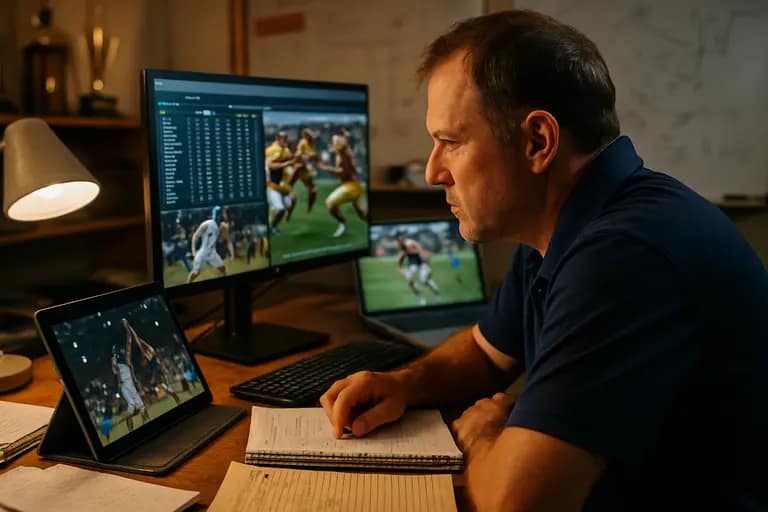
The story is not limited to Texas A&M and Texas. Tarleton State listed Colby Thienpont as Director of Data/Analytics for the baseball program as of the 2026 season. That title matters because it shows analytics work appearing outside the state’s most visible baseball brands. Smaller athletic departments may not have the same resources as SEC programs, but even one defined data role can shape how video, reports and performance review are organized.
UT Dallas also offers a useful conference-level example. In 2026 Lone Star Conference play, UT Dallas posted a .331 team batting average over 48 conference games, with a .497 slugging percentage and a .448 on-base percentage. The same research notes show power across Texas-based Lone Star Conference programs, with UT Dallas, UT Tyler, Angelo State and St. Edward’s among leading teams and UT Dallas alone hitting 47 home runs in conference play over 48 games.
Data Work Is Becoming A Student Pathway
Student involvement is another sign of the shift. Texas listed a baseball video and analytics internship starting in August 2025, with duties that included building analytical models using R or Python, assisting with analytical and video work during practices and games, creating scouting reports and maintaining video equipment. That kind of position connects college baseball to classroom skills in statistics, coding, sport management and communication.
For Texas students who grew up around the sport, this creates a different entry point into college baseball. Not every contributor is a player, coach or traditional manager. Some may work through video systems, code, reports and player feedback. That matters for a state with deep baseball participation because it broadens who can take part in a program’s competitive work.
- Coaches can use data to organize opponent scouting and player feedback.
- Players can connect practice results with game plans and measurable goals.
- Students can build sport-related skills through video, coding and reporting roles.
- High school programs can better understand what colleges value in player development.
Why Texas Baseball Analytics Matters To College Programs
Texas Baseball Analytics matters because it sits at the intersection of winning, player development and local identity. A College World Series run at Texas, a nationally ranked pitching staff at Texas A&M, a data title at Tarleton State and high offensive output in the Lone Star Conference all point to the same direction: college baseball in Texas is becoming more measured, more planned and more connected to technology.
The best programs will be the ones that keep the human side attached to the numbers. A model can identify a matchup, but a player still has to compete in front of family, classmates and alumni. A pitch chart can suggest an approach, but a catcher still has to manage the inning. A scouting report can shape a plan, but a coach still has to decide what the player can handle.
That is where the Texas angle carries real weight. Baseball in this state is tied to high school fields, summer travel schedules, college towns and regional pride. Texas Baseball Analytics is not just about software or sensors. It is about how programs turn information into better teaching, how recruits judge development, and how college teams try to turn local baseball talent into postseason results.