

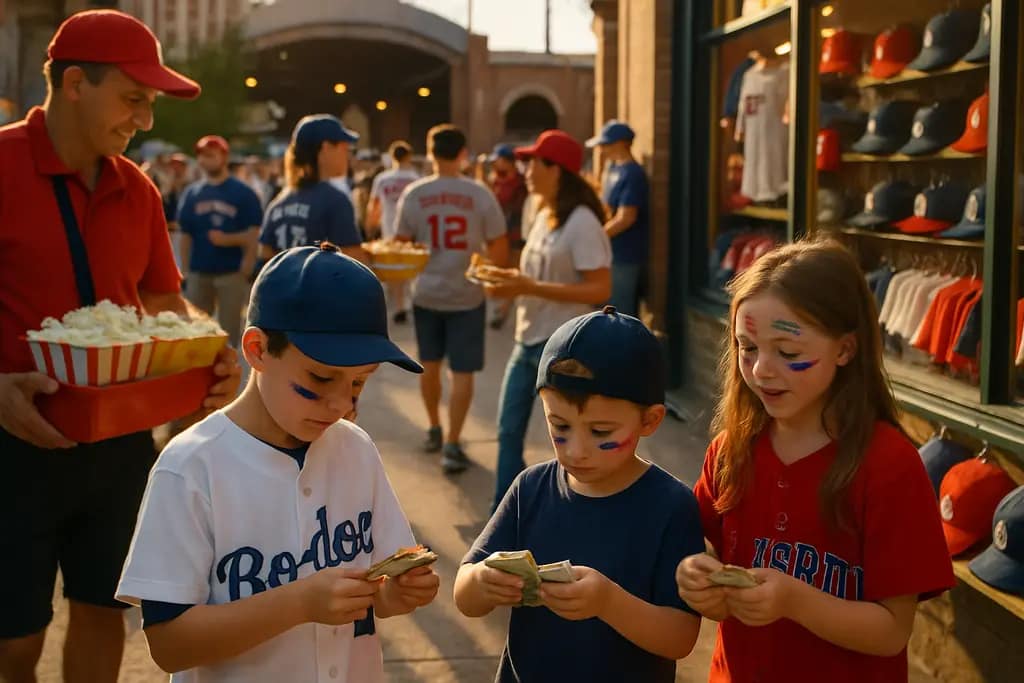
Texas Baseball Support is easiest to measure on weekends when ballfields are full, hotel parking lots are crowded and restaurant staffs are preparing for late postgame rushes. The strongest community impact stories in Texas baseball are not only about who wins a bracket. They are about whether a tournament, grant program or sponsorship model gives coaches better tools, gives families a reason to spend locally and gives small businesses a predictable sports calendar they can plan around.
That matters because baseball in Texas often sits at the center of local identity. Youth teams, high school booster clubs, nonprofit programs and professional organizations all touch the same network of fields, cages, concession stands, hotels, restaurants and retailers. The community impact is clearest when public numbers connect baseball activity to local spending, as they did in Texarkana during the first half of 2026, and when grant funding moves from a major league platform into youth diamonds across Texas and nearby states.
Texas Baseball Support And Local Spending
Texas Baseball Support Starts With Weekends
A tournament weekend is a sports event, but for host cities it also functions as a business cycle. Families arrive with coolers, folding chairs, hotel reservations and plans for meals between games. Coaches need practice time, lineups, hydration, safety supplies and sometimes emergency gear. Local businesses feel that rhythm in ways that a single attendance count cannot fully explain.
Texarkana gives the clearest verified example from the research. The Swanger Sports Complex hosted 15 tournaments between February and June 2026, drawing about 43,000 visitors and 420 teams from Texas, Arkansas, Louisiana and Oklahoma. About 61 percent of those visitors came from outside the local area, and direct visitor spending was estimated at approximately $6.5 million for local hotels, restaurants, retailers and other businesses, according to the city’s Swanger Sports Complex study.
What The Swanger Numbers Say
The 61 percent out-of-area figure is the number that should catch the attention of every Texas city considering how baseball fits into local economic planning. Local teams are valuable because they keep fields active. Traveling teams add a different layer because their families often need lodging, meals, fuel, shopping stops and entertainment during dead time between games.
That is where Texas Baseball Support becomes more than a slogan. A city that maintains quality fields can attract tournament operators. Tournament operators fill weekends. Families then spread spending across businesses that may have no formal connection to baseball. A restaurant near the complex may not sponsor a team, but it can still feel the impact when five age divisions are playing on the same Saturday.
There is also a player development angle. Better-used facilities often create stronger reasons to keep fields playable, organized and safe. Coaches can plan around consistent venues. Younger players learn in tournament settings that force quick adjustments: playing a morning game, waiting through a long break, then responding in a late bracket game. Those repetitions have value, especially in a state where baseball calendars stretch across school, select and summer schedules.
How Grants Reach Youth Programs
Rangers Funding Moves Beyond The Ballpark
The professional side of Texas baseball can influence community programs without requiring every family to drive to Arlington. On September 3, 2026, the Texas Rangers Baseball Foundation and Globe Life awarded $120,800 to 18 nonprofit youth baseball and softball programs across Texas, Louisiana and Oklahoma. The grants funded facility improvements, equipment, scoreboard upgrades and uniform purchases, and the program has surpassed $1.4 million across more than 165 organizations since its 2012 start, according to the Rangers and Globe Life announcement.
That kind of funding matters because youth baseball costs rarely sit in one category. A team may have enough players but need safer catcher gear. A league may have volunteer coaches but need scoreboard repairs. A nonprofit may have a field but need uniforms that make participation less expensive for families. Grants do not solve every issue, but they can remove specific barriers that slow down access.
Why Small Purchases Matter
For local businesses, the value of a grant can move through the community in practical ways. Equipment may be purchased through regional vendors. Field work may involve local contractors. Uniform orders can support print shops or suppliers. A scoreboard upgrade can create a better game-day environment for families who are already buying concessions, meals and fuel nearby.
There is a coaching strategy piece here, too. A well-funded youth program can schedule clinics, maintain safer spaces and reduce the number of practice plans that depend on improvising around broken gear. That does not guarantee player development, but it gives volunteer coaches a cleaner baseline. For a related Texas Baseball Review breakdown of that funding pattern, our analysis of Rangers Foundation grants tracks how this support reaches youth baseball and softball groups.
What Local Businesses Actually Provide

Beyond A Check On The Wall
Local business engagement in baseball is often described as sponsorship, but the better models are more specific than a banner on an outfield fence. The research notes point to Texas organizations using defined partnership lanes: equipment support, field renewal, clinic programming, scholarship pathways, in-kind donations, facility access, supplies and volunteer service. Those are different types of help, and each one solves a different baseball problem.
- Equipment support: lowers the cost of participation and helps coaches run safer practices.
- Field and facility help: keeps playing surfaces, cages and shared spaces usable for more teams.
- Clinic and mentorship support: connects young players with instruction, leadership habits and repeatable routines.
- Program sponsorship: gives high school and youth teams funds for media guides, travel needs, uniforms and operating costs.
The most useful partnerships are the ones that match a real baseball need with a business that can meet it. A restaurant may be best suited for team-night fundraising. A construction company may fit a field repair project. A sporting goods store may help with equipment drives. A local medical or training group may support education around safety, conditioning or recovery routines without making promises that go beyond its role.
Community Nights And Tournament Traffic
Community nights, booster sponsorships and tournament hospitality each reach a different audience. A minor league community night can bring civic groups, local businesses and families into the same ballpark setting. A high school booster package can support a program that represents a school district week after week. A tournament complex can bring out-of-town families into a city that might otherwise never be on their travel list.
This is where Texas Baseball Support shows its range. The same sport can create a Saturday sales lift for a local cafe, a season-long sponsorship opportunity for a booster club and a grant-funded upgrade for a youth league. Each example is smaller than a major league attendance headline, but together they describe how baseball money moves through Texas communities.
Why Texas Baseball Support Matters To Local Businesses
A Community Impact Scorecard
The most useful way to judge community impact is to connect baseball activity to clear local markers. Visitor counts, team counts, out-of-area participation, hotel demand, restaurant traffic and direct spending all help cities separate real impact from feel-good claims. Texarkana’s February-to-June 2026 tournament data did that by tying field usage to visitors, teams and estimated spending. The Rangers grant data did it from another angle by tying corporate and foundation support to named categories such as equipment, facilities, scoreboards and uniforms.
Those numbers also help local businesses decide how to engage. If a city can show steady tournament traffic, hotels and restaurants can staff for baseball weekends. If a youth league can show how many families it serves, a business can sponsor with a clearer sense of reach. If a nonprofit can report how donated equipment or field work was used, sponsors can see the result beyond a logo placement.
What Communities Can Track After Each Tournament
The next layer for Texas communities is better local measurement. Cities do not need to claim that every baseball weekend changes the economy. They can track practical signals: booked room nights, out-of-town team share, restaurant promotions tied to game schedules, repeat tournament operators and youth program participation after facility upgrades.
Texas Baseball Support works best when it is grounded in that kind of evidence. Fields create the gathering place. Coaches and volunteers create the player experience. Businesses help turn games into community activity that reaches beyond the foul lines. For Texas baseball, the value is not only in the final score. It is in whether a weekend at the ballpark leaves local programs stronger and local businesses better connected to the families they serve.