

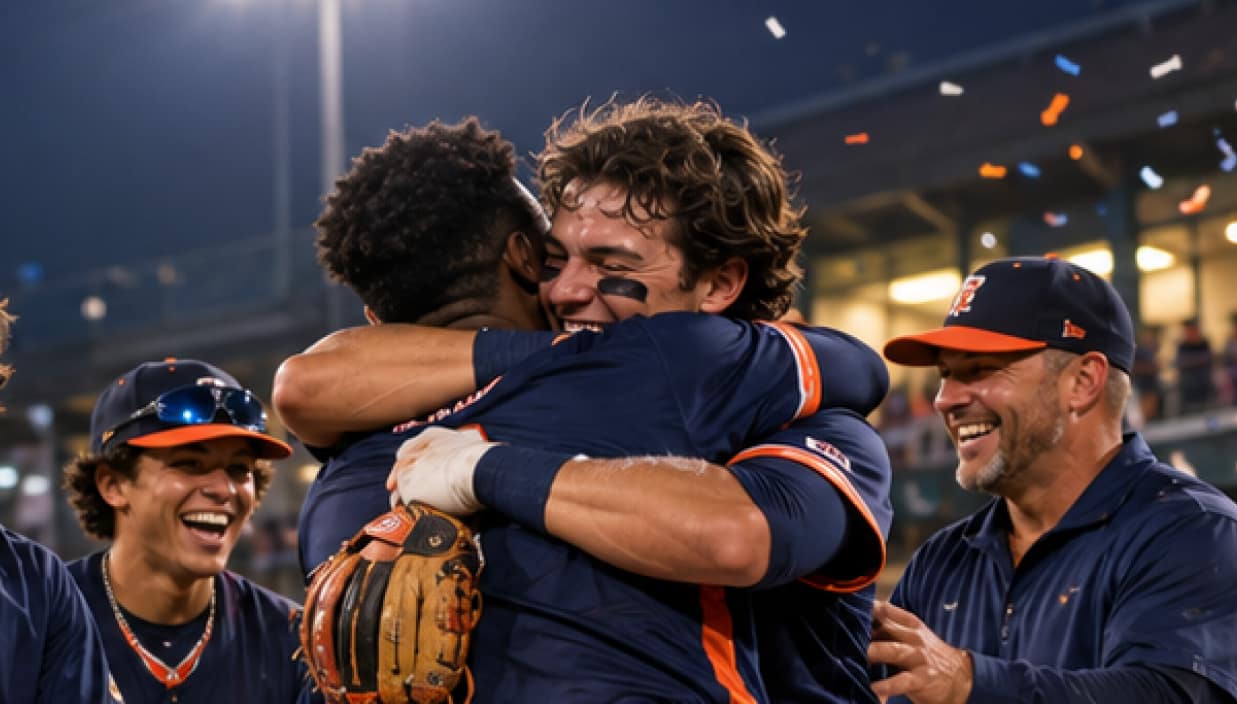
The Woodpeckers championship on September 16, 2026 gave the Houston Astros more than a trophy at the bottom of the farm system. Fayetteville’s 7-4 win over the Charleston RiverDogs in Game 2 of the best-of-three Carolina League Finals at Segra Stadium completed a sweep and gave the club its first title under the Fayetteville name, and its first overall since the 2018 Buies Creek Astros era, according to the official championship recap. For Houston fans in Texas, the result matters because Single-A is where raw tools, new draft picks and long-term roster planning begin to take a more visible shape.
Fayetteville finished 71-58 in the regular season, then went 4-0 in the postseason by sweeping Fredericksburg in the semifinals and Charleston in the Finals. That clean postseason run does not guarantee major league success for every player involved. It does give the Astros a verified development marker after a season in which young hitters, newly drafted players and pitching depth all converged in one affiliate.
Why The Woodpeckers Championship Matters To Houston
Results That Carry Development Weight
Minor league titles can be tricky to evaluate. A winning Single-A team is not the same as a finished major league pipeline. Players are promoted, workloads are managed and lineups change as the parent club prioritizes individual growth. Still, Fayetteville’s finish stands out because the club improved as the season moved along. The Woodpeckers were 32-33 in the first half, then went 39-25 to win the North Division’s second-half title.
That second-half push included a 13-game winning streak to close August. In a developmental setting, that kind of stretch suggests more than a hot week. It points to a group that handled routine, travel, bullpen usage, lineup turnover and late-season fatigue better than it had earlier in the year. For an Astros organization trying to keep a steady flow of contributors moving toward Houston, that matters.
Woodpeckers Championship As A Development Checkpoint
The Woodpeckers championship should be read as a checkpoint, not a promise. The Astros still have to move players through High-A, Double-A and Triple-A before anyone becomes part of the major league roster conversation at Daikin Park. Single-A performance can fade if swing decisions do not translate or if pitchers lose command against older hitters. But Fayetteville’s title put several names into a sharper frame for Texas fans who track the Astros beyond the major league box score.
That is especially relevant because Houston’s recent major league teams have leaned on internal development to protect roster depth. For readers following the parent club’s roster direction, the Fayetteville season connects naturally to larger questions about how Houston balances present contention with future supply, a theme also visible in our coverage of the Astros rebuild analysis.
Draft Class And Young Bats Changed The Ceiling
New Draftees Produced In September
One of Fayetteville’s clearest late-season stories was the quick impact of Houston’s 2026 Draft class. First-round pick Logan Hughes, fourth-rounder Kam Durnin and 17th-round pick Ben Tryon all affected the postseason. Tryon hit a grand slam in Game 2 of the Finals, while Durnin posted a .571/.667/.929 slash line with one home run, two doubles, six runs and five RBIs during the postseason run.
For a Texas audience, that is the kind of early return that makes the lower minors worth following closely. Draft picks are often discussed in Houston on selection night, then disappear from the daily conversation while the major league club takes center stage. Fayetteville gave those players immediate competitive stakes. They were not just accumulating professional at-bats in quiet September games; they were contributing during a championship series.
Alvarez And Neyens Gave Fayetteville A Higher Bar
Top system prospects Kevin Alvarez and Xavier Neyens were central to Fayetteville’s season arc. Alvarez, an 18-year-old outfielder, posted a .772 OPS with 11 home runs and a team-leading 26 doubles. Neyens, a 19-year-old third baseman, slashed .240/.449/.462 with 14 home runs and 38 RBIs before his promotion to High-A Asheville on July 14, 2026.
Their presence raised the standard for the club from the start. For the first time in franchise history, the team’s top two Astros system prospects were both on the Fayetteville Opening Day roster for the 2026 season. That gave the affiliate a prospect weight it had not carried in the same way before. The title was not built only on those two players, but their performance and Neyens’ promotion showed the development system doing two tasks at once: competing at Single-A and moving players when their progress warranted a higher level.
Catcher Arturo Flores added another layer to the offensive profile. He led the team with 17 home runs and 58 RBIs while slashing .253/.362/.455 over a career-high 84 games. That was a notable step from the .578 OPS he posted in his 2025 Single-A stint. In player development terms, that kind of year-to-year gain matters because catching prospects face a heavy workload beyond the bat, from game-calling to pitcher relationships to durability across a full summer.
Pitching Depth And Staff Continuity
Strikeouts Were Not A One-Arm Story
The Fayetteville title run was not just a hitting story. Jagger Beck, a 19-year-old undrafted signee, recorded 102 strikeouts in 86 2/3 innings with a 2.80 ERA and 1.23 WHIP. Javier Perez totaled 103 strikeouts in 89 1/3 innings for the Woodpeckers. Those numbers show the Astros had more than one lower-level arm capable of missing bats across a meaningful workload.
That depth is significant because Houston’s major league pitching plans can change quickly. Injuries, innings limits and bullpen churn can push organizations to find help faster than expected. Beck and Perez were not major league-ready arms on September 16, 2026, based only on Single-A results. They did, however, give the Astros more credible names to track as the system sorts out which pitchers can carry strikeout ability into tougher leagues.
Coaching Context Matters In Single-A
Manager Carlos Lugo’s staff entered 2026 with evidence of development output already on its resume. In 2025, the staff guided 16 Woodpeckers players to promotions to High-A Asheville, and under pitching coach James Wiseman the pitching staff led the Carolina League in ERA at 3.66 and opponent batting average at .216, while ranking third with 1,202 strikeouts, according to the official 2026 coaching staff announcement.
That context matters because a Single-A affiliate has to balance winning with teaching. A staff can chase short-term matchup advantages, or it can keep pushing players through the daily habits Houston wants to see later in the system. Fayetteville’s 2026 finish suggests those goals were not in conflict. Players improved, several names gained attention, and the team still won the league.
The most useful read for Astros fans is not that every Fayetteville contributor is now on a direct path to Houston. The better read is that the affiliate created a healthy development setting. Hitters with prospect status produced. New draftees handled pressure soon after signing. Pitchers missed bats. A catcher took a clear offensive step. Those are separate signals, and Fayetteville had all of them in the same season.
What The Woodpeckers Championship Means For Houston
Why Texas Fans Should Track Fayetteville Differently
The Woodpeckers championship should push more Astros fans in Texas to treat Fayetteville as an early warning system for organizational direction. Houston supporters often focus on Triple-A Sugar Land because it sits closest to the major league roster. That makes sense for immediate call-up needs. Single-A tells a different story: which young players are beginning to separate, which draft picks adjust quickly and which pitchers show traits worth testing at higher levels.
There is local relevance even though Fayetteville plays in North Carolina. The Astros’ future roster depth in Houston starts with affiliates outside Texas, and the decisions made at those levels shape what fans eventually see at the major league level. If Alvarez, Neyens, Hughes, Durnin, Tryon, Flores, Beck or Perez keep progressing, the roots of that movement will trace back to a 2026 Fayetteville club that turned development into wins.
The practical value of the Woodpeckers championship is that it gives Houston a fresh set of evidence. The Astros saw a 71-58 club become a second-half division winner, close August on a long winning streak and sweep through September postseason play. That combination does not settle the future, but it gives the organization a stronger base of players to evaluate as the next wave moves toward Asheville and beyond.