


The Jalen Brewster transfer from Cedar Hill High School to Buford High School in Georgia landed as more than a single roster move. On August 23, 2026, Brewster, a five-star defensive lineman from the Dallas area, announced that he was leaving Cedar Hill for Buford for his senior season, with Sports Illustrated reporting both the move and his stated focus on what was best for his future SI report. For Texas high school football, the transfer put a familiar pressure point back in view: elite player development now sits at the intersection of academics, eligibility rules, national recruiting and local program identity.
Brewster’s case drew attention because of who he is and where he left. Cedar Hill is not a remote program outside the recruiting radar. It sits in the Dallas-area talent belt, a region college staffs treat as core recruiting territory. Brewster had already built a national profile before leaving Texas, with Rivals ranking him No. 1 overall in the 2027 class and 247Sports placing him among the top five overall, according to the same Sports Illustrated report. When a player with that profile changes states before playing his senior year, every Texas coach, athletic director and recruiting coordinator has reason to study the details instead of reducing it to player movement.
Why The Jalen Brewster Transfer Hit Texas Hard
Jalen Brewster Transfer And Early Graduation
The Jalen Brewster transfer carried a specific academic angle. Brewster said the move would help him graduate in December 2026 while staying aligned academically and athletically. That point matters because early graduation has become a practical recruiting tool for high-end prospects. A player who can finish high school in December can join a college program earlier, enter winter strength work, learn the playbook before spring practice and begin the physical transition before the rest of his signing class arrives.
For Texas high school programs, that creates a tough planning question. Coaches want to build four-year development tracks, especially for linemen whose bodies and technique often require patience. Families, meanwhile, may weigh whether another state’s calendar, school structure or eligibility process gives a recruit a better route to early college entry. The facts available from Brewster’s move do not prove a broad exodus by themselves, but they do show how academic timing can sit beside football development as a transfer driver.
Buford’s Defensive Fit
Buford offered a very different setting from Cedar Hill, but not a lower-profile one. The Georgia program entered the discussion as a defending champion after a 15-0 season in 2025 and a Class 6A state title, according to the research record. That matters because elite recruits are not always leaving Texas for easier competition. In Brewster’s case, the destination was another nationally visible program with its own expectations and defensive standards.
That should temper any easy Texas-versus-Georgia storyline. Brewster’s move was not framed only as chasing exposure. He already had it. The sharper issue is whether a prospect can find the academic timing, eligibility path and roster role he wants somewhere else. For Texas coaches, that is a recruiting retention problem as much as a talent evaluation problem.
Eligibility Rules And Recruiting Incentives
UIL Debate After The Move
The policy debate accelerated quickly after the announcement. A Yahoo Sports article published on August 24, 2026, connected Brewster’s last-minute exit from Cedar Hill with a wider discussion over whether the UIL should relax transfer rules, including ideas such as a one-time transfer without penalty or broader transfer freedom Yahoo Sports analysis. The same report noted concern from opponents that looser rules could create stronger destination programs while weakening community-based athletics.
That is the Texas tension in plain terms. The UIL has long had to balance competitive balance, local school identity and individual student circumstances. Brewster’s move did not create that debate, but it gave it a high-profile example. If an elite Dallas-area recruit believes an out-of-state move better serves his academic and athletic schedule, Texas leaders have to ask whether current policies are protecting local programs or pushing some families to look elsewhere.
Why Rule Differences Matter
The research notes also said Brewster had enrolled at Buford and was attending classes in late August 2026, while eligibility paperwork had not yet been submitted to the Georgia High School Association at that time. No supplied source confirmed the final status after that late-August point, so it would be wrong to claim when he became available for games. The uncertainty itself is useful: transfers at this level are not only about Hudl clips, scholarship offers and social media announcements. They move through school calendars, state associations and paperwork windows.
Texas families watching the process may take different lessons from it. Some may see the value in staying put and avoiding eligibility risk. Others may decide that an out-of-state school gives them a clearer route toward a personal graduation target. Recruiters from college programs will pay attention either way, because a player’s high school location can affect in-person evaluation windows, regional relationships and which coaching staffs get repeated access.
What It Means For Cedar Hill And Texas Programs
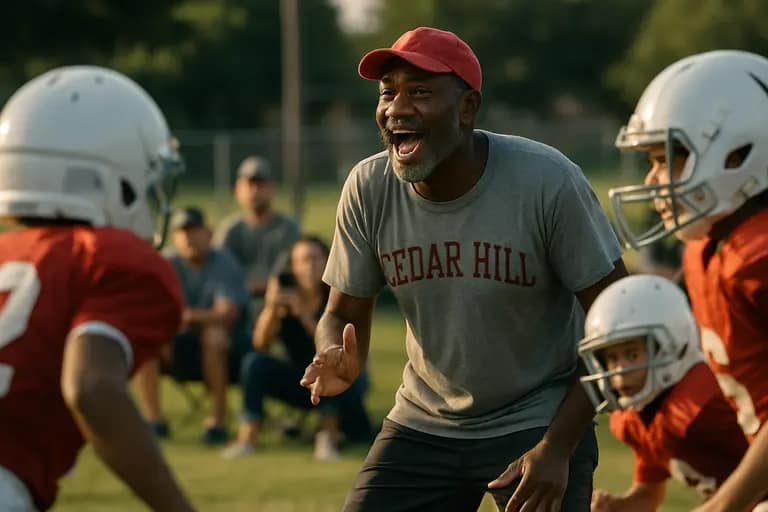
Cedar Hill’s side of the story deserves attention because local high school football is built on more than star rankings. A late transfer affects practice structure, defensive front planning and the locker-room hierarchy that coaches spend months building. Even when one player is talented enough to attract national headlines, his old teammates still have a season to play and a community to represent.
For Texas programs, the key lesson is not that every elite recruit is likely to leave. The verified facts do not support that kind of sweeping claim. The lesson is that top players and their families now evaluate programs through several filters at once: academic pacing, eligibility confidence, position coaching, competition level, college access and the chance to enter college early. A coach who can answer only the football part of that conversation may be operating with an incomplete recruiting retention plan.
The Jalen Brewster transfer also affects how college staffs read Texas pipelines. Brewster was already committed to Texas Tech as of October 4, 2025, according to the research notes, while other major programs had shown interest. A move to Georgia does not erase his Texas roots, but it changes the weekly orbit around him. Coaches recruiting him have to account for Buford’s schedule, Georgia contacts and a new high school staff. That creates more work for Texas-based recruiters trying to maintain a relationship that began inside their own state.
For readers who follow movement from high school recruiting into college roster construction, the same pressure shows up at the next level: programs are trying to hold talent while adding talent. Our recent breakdown of Texas transfer strategy looked at how roster depth and player movement force staff decisions beyond simple star ratings. Brewster’s case is the high school version of that same roster math, with community ties added to the equation.
What Jalen Brewster Transfer Means For Texas
The most useful way to read this case is through incentives. Brewster did not need to leave Texas to become known nationally. He was already one of the most heavily regarded players in the 2027 class. That makes the Jalen Brewster transfer less about exposure and more about structure. If a family believes another state offers a better academic timeline or eligibility path, Texas has to understand why.
That does not mean the UIL should adopt every proposed change. A one-time transfer model, unlimited transfers and the current system each carry tradeoffs. Looser rules may help individual families, but they may also strain smaller programs and intensify movement toward schools with the most talent. Stricter rules may protect local balance, but they can push some prospects out of state if families see Texas as too rigid. The policy answer is not simple, and the research record does not prove which option would work best.
What can be said with confidence is that Texas high school football can no longer treat elite recruiting retention as automatic. The state still produces top-tier talent, and Dallas-area football remains central to college recruiting. Yet Brewster’s move showed that production alone does not guarantee that every elite player will finish his high school career inside Texas. Coaches, school leaders and UIL decision-makers now have a case study that links player development, academics and transfer policy in one public decision.
The Jalen Brewster transfer will be remembered in Texas not only because a five-star defensive lineman left Cedar Hill, but because it forced a harder question for the state’s football structure: how can Texas protect community-based high school sports while giving elite athletes enough flexibility to stay home?