

Longhorns Game-Day Operations for Texas’ home game against Ohio State on Saturday, September 12, 2026, are now best viewed as a real case study rather than a preview. As of September 29, 2026, the game has already been played at DKR-Texas Memorial Stadium in Austin, with a 6:30 p.m. Central kickoff on ABC. The operational picture was unusually demanding: Texas had announced on August 11, 2026, that all 2026 home game tickets were sold out, and the recorded attendance for the Ohio State game was 105,044 against a listed stadium capacity of 100,119.
Those numbers matter because game-day planning is not only about comfort. It affects arrival timing, student entry, parking pressure, heat exposure, concessions demand and how quickly a full stadium can settle before kickoff. In performance terms, the crowd itself becomes part of the event environment. A home team wants noise and energy; stadium staff need predictable flow. When attendance reaches roughly 105 percent of listed capacity, small delays at gates, garages or concourses can spread quickly.
What Longhorns Game-Day Operations Revealed
Attendance Pressure Changed The Margin For Error
The Texas-Ohio State crowd created a tight operating window from the start. Stadium gates opened two hours before kickoff, which placed general fan entry around 4:30 p.m. Central. UT students using “Big Ticket with Football” access at ShopBack Gate had a three-hour window before kickoff. That structure gave the venue staggered entry points, but it also required fans to treat gate assignment as part of their plan rather than a detail to check on the walk up to the stadium.
Fans were required to enter through the gate listed on their mobile ticket. That detail becomes more than a policy line when the crowd exceeds 100,000. A fan arriving at the wrong side of DKR-Texas Memorial Stadium may add extra walking in late-afternoon heat, reach a longer line, or create unnecessary cross-traffic around the stadium perimeter. For a primetime game that still carried afternoon weather risk, that kind of misstep had real physical and logistical cost.
Longhorns Game-Day Operations In The Entry Window
Only mobile tickets were accepted for entry, and tickets had to be downloaded to a digital wallet such as Apple Wallet or Google Wallet. Screenshots of QR codes were not reliable for admission, while parking passes still used QR codes. That split between ticket entry and parking access created a two-part preparation requirement: fans needed the right credential format for the gate and the right code ready for parking.
For Longhorns Game-Day Operations, that distinction is a useful lesson. Mobile ticketing can speed entry when devices are charged, wallets are loaded and fans know their assigned gate. It can slow entry when guests wait until they reach the scanner to search for tickets, open email, adjust brightness or find a signal. The stadium policy placed more responsibility on fans before leaving home, not once they reached the east or west side of DKR.
- Download mobile tickets to a digital wallet before leaving for campus.
- Confirm the assigned gate and plan the walking route around that gate.
- Keep parking passes separate and ready, since those still used QR codes.
- Carry a payment card, because concessions and merchandise inside the stadium were cashless.
- Arrive early enough to account for heat, lines and road changes near campus.
Heat Metrics Shaped Longhorns Game-Day Operations
The Weather Was A Competitive Environment For Fans
The weather on September 12 was not a minor comfort issue. A Heat Advisory was in effect from 12:00 p.m. to 7:00 p.m. CDT, with high temperatures near 105 degrees and a heat index possibly up to 110, according to the National Weather Service Austin forecast. Because kickoff was 6:30 p.m., the heaviest pregame movement happened during the advisory window.
That timing shaped every fan-facing decision. Tailgating was permitted in designated lots beginning at 7:00 a.m., which gave groups a long runway for pregame setup. But a long pregame window under full sun can wear down fans well before the first quarter. Hydration, shade, sunscreen and pacing were not casual suggestions; they were part of a sensible plan for staying healthy enough to enjoy the game.
Longhorns Game-Day Operations had to balance the energy of a major nonconference matchup with the reality of Central Texas heat. Families with children, older fans and guests with mobility needs faced the highest planning burden. A 20-minute walk across campus feels different at 105 degrees than it does on a mild November afternoon. The same is true for standing in a gate line, waiting at a rideshare point or returning to a garage after the final whistle.
Cashless Concessions Put Speed On Preparation
Inside the stadium, concession and merchandise transactions were cashless, using credit, debit or prepaid cards. That policy can reduce transaction time when fans are prepared, but it leaves little room for those who arrive with only cash. Merchandise outlets included in-stadium locations and outside Team Shop pods before gates opened, giving fans options before entering the seating bowl.
From an operations lens, cashless payment connects directly to crowd rhythm. The faster fans move through concessions, the less pressure builds in concourses during quarter breaks and halftime. In a sold-out environment, every minute matters. A few stalled lines can push fans back to seats late, reduce access for others moving through the concourse and create pinch points near stairwells or portals.
Parking And Access Around DKR
Campus Parking Required Earlier Decisions
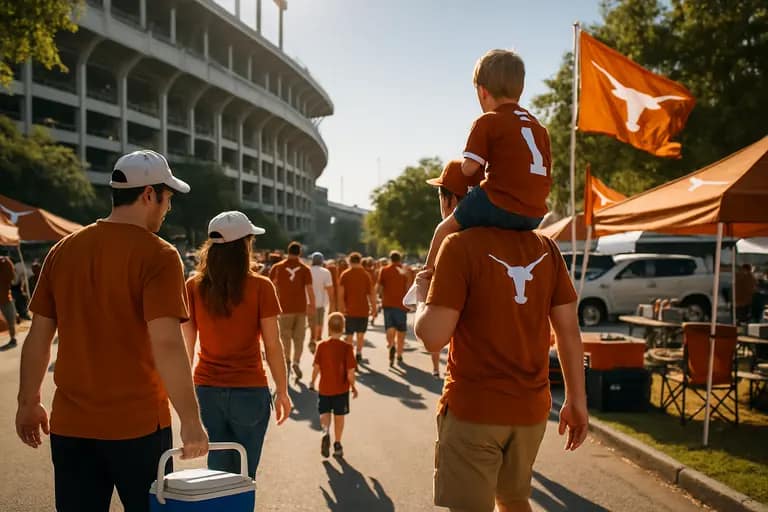
Parking for the Ohio State game depended on several categories. Texas listed single-game and season parking permits based on Longhorn Foundation donor membership levels. Public parking was also available in State Garages and UT-controlled lots, while Lot 26 at 701 W. 51st Street handled RVs and oversized vehicles with shuttle service provided through state property game-day parking information from the Texas Facilities Commission.
The operational takeaway is direct: fans who waited to solve parking near kickoff entered a much tougher traffic pattern. Construction on I-35 affected access, including no inbound access to MLK Boulevard from the I-35 upper deck. That kind of route change can break old habits for Austin drivers who normally approach campus the same way every football Saturday.
Postgame Flow Was Part Of The Same Plan
Postgame movement also required attention. One-way street restrictions applied after the game on roads including San Jacinto Boulevard, Robert Dedman Drive, Trinity and portions of 21st Street. That means a parking decision before kickoff also shaped the exit plan after the game. A garage that looks convenient on a map may not feel convenient if the postgame traffic pattern sends a driver in an unexpected direction.
ADA access carried its own planning points. Designated ADA parking and parking permit holders could use signed ADA-compliant spaces, while Special Accommodations Parking in closer lots was offered on a first-come, first-served basis with fees applying. ADA guests could enter through Gates 7, 14, 16 or 27. In a crowd of 105,044, matching parking location, gate access and arrival time was the most reliable way to reduce strain.
What Ohio State Taught Texas Fan Planning
The Ohio State game showed that Texas home football planning now belongs in the same conversation as team preparation. Coaches study tempo, spacing and execution. Fans and operators work through their own version of those metrics: arrival rate, gate distribution, parking capacity, heat exposure and transaction speed.
The lasting lesson for Longhorns Game-Day Operations is that success starts before fans reach DKR-Texas Memorial Stadium. A downloaded wallet ticket, a confirmed gate, a heat plan, a card for cashless purchases and a parking route built around road changes all reduce stress on the individual fan and on the stadium system. For Austin, where a packed Texas football Saturday touches campus streets, state garages, tailgate lots and neighborhood traffic, preparation is a community issue as much as a stadium issue.
Texas-Ohio State on September 12, 2026, offered the clearest possible reminder: a sold-out Longhorns home game is not just an event on the schedule. It is a full-day operation shaped by weather, infrastructure and fan behavior. The better those pieces fit together, the better the game feels for the people in the stands and the smoother the stage becomes for the athletes on the field.