

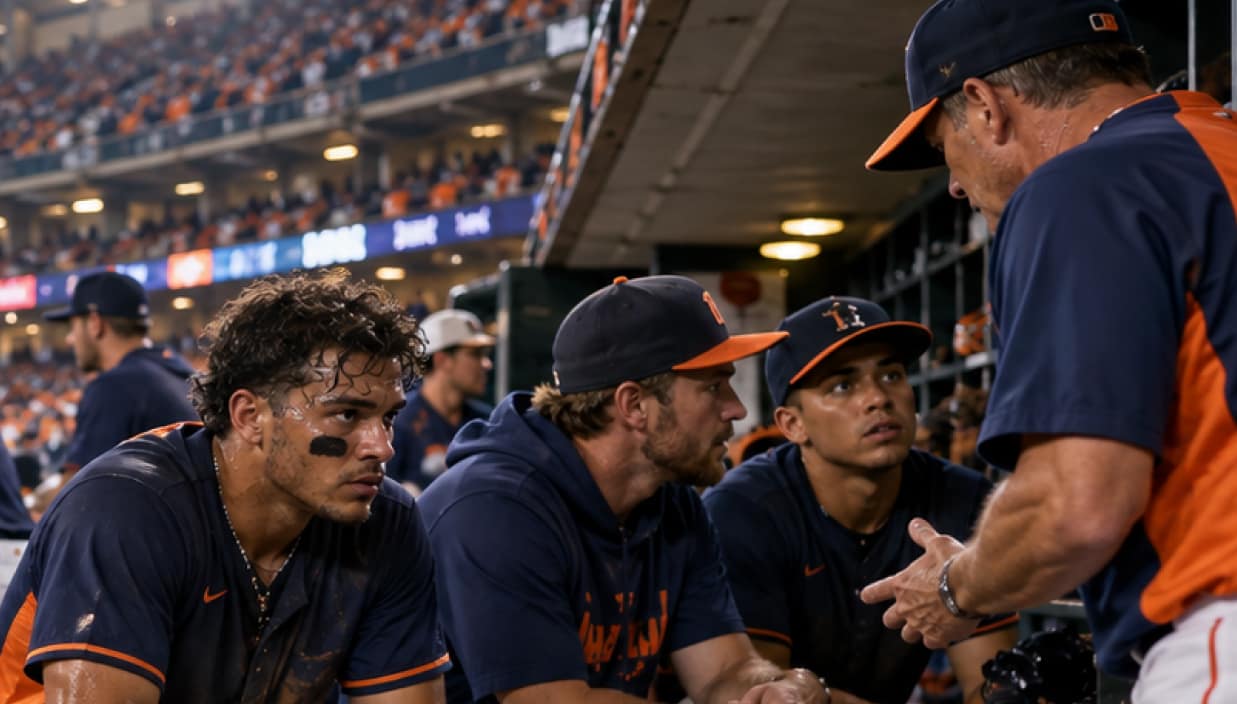
The Astros Playoff Push has reached the stage where Houston’s recent record, lineup health and pitching depth all have to be judged together. As of September 19, 2026, the Astros were 77-79, second in the American League West and tied with the Texas Rangers in the division standings, according to the official Astros standings. That position kept Houston close enough to make the final week matter, but it also left very little cushion after a difficult September.
The run-production issue is the clearest warning sign. Since the August 3 trade deadline, Houston scored fewer runs than all but three other MLB teams, and in 31 post-deadline games the Astros had 18 games with three or fewer runs, as reported by the Houston Chronicle’s offense report. For a club trying to survive a tight AL West finish, that is not just a slump. It changes bullpen usage, exposes rotation gaps and increases the cost of every defensive mistake.
Why The Astros Playoff Push Is Tight
Record Pressure In The AL West
Houston’s standing on September 19 put the club in a narrow competitive space. The Astros were not buried, but they were also not controlling the division with the margin that Houston fans grew used to during stronger recent runs. Being tied with Texas while sitting below the top of the AL West made every remaining game carry two meanings: a direct postseason consequence and a local rivalry consequence for baseball followers across Texas.
That matters in Houston because this team is being judged against a high internal standard. The Astros are not treated like a pleasant surprise when they hover around .500 in late September. The fan base expects a club with postseason experience to turn tight standings into decisive series wins. The problem is that the 2026 version of the roster has often had to win with thinner offensive support and a pitching staff that has been asked to absorb repeated changes.
Astros Playoff Push And Run Prevention Math
Low-scoring baseball can work if the pitching staff is stable and the defense turns narrow leads into wins. Houston has not had that kind of clean formula. Research notes through September 20 show a 7-11 September record, with the Astros batting .229, reaching base at a .289 clip and slugging .413 during that span. Over the 30-day window from August 21 through September 20, Houston was 13-15 with a .228 team batting average.
Those numbers explain why the margin feels so thin. A club scoring three or fewer runs in more than half of its post-deadline games has to ask its starters to be sharp immediately and its relievers to carry leverage innings almost every night. That is a hard way to play through late September, especially with road games still on the schedule.
Roster Health Has Narrowed Houston’s Options
Correa’s Absence Changes The Infield Picture
Carlos Correa’s season-ending left ankle surgery, with his focus shifting to a 2027 return, removed a proven shortstop from the late-season equation. For Houston, the impact is more than one missing name. It changes how the club can allocate infield defense, lineup balance and late-game substitutions. In a close game, the difference between a settled defensive alignment and a patched-together one can be felt in one ground ball with runners moving.
Jeremy Peña’s return from a calf strain on July 10 gave Houston a needed stabilizer. Research notes showed Peña had hit .307 with six home runs and an .843 OPS since May 18, and that he held a .295 average with a .799 OPS in 48 games by midseason. That production matters because Houston’s offense has needed contact quality and athletic defense at the same time. Peña cannot solve every lineup issue by himself, but his presence gives the Astros a more credible center point in the infield.
Alvarez’s Ankle And The Power Question
Yordan Alvarez leaving a September 11 game with a sprained right ankle added another pressure point, even with the injury described in research as not serious. Houston’s lineup needs his power threat, particularly when the rest of the order is struggling to string together innings. A limited Alvarez can still affect how opponents pitch, but availability and lower-half strength matter when a hitter’s value depends on impact contact.
That is the core of the Astros Playoff Push from a roster standpoint: Houston does not simply need its best players listed as available. The Astros need enough physical reliability to avoid shrinking the playbook. If Alvarez is compromised, if Correa is unavailable and if the bottom half of the order stays quiet, the lineup becomes easier for opposing managers to attack.
Pitching Depth Is Still A Daily Test
Rotation Turnover Has Been Extreme
The Astros have used 18 different starting pitchers in 2026, the most in MLB and a franchise record, according to the research notes. That number says plenty about the staff’s season. It also explains why late-game planning has been difficult. When a team cycles through that many starters, the bullpen often becomes the bridge between survival and collapse.
Mike Burrows, who was 4-9 with a 5.99 ERA in 18 starts before injury, was rehabbing but was not expected to be available for the final road trip. The research notes identify Hunter Brown, Hayden Wesneski and Peter Lambert as the starters who had delivered steadier results. Rookie Ethan Pecko, Houston’s No. 9 prospect, made his MLB debut on August 19 and became one of the 18 starters used. His presence adds development value, but late September is not a forgiving classroom.
Bullpen Strain After Okert’s Injury
Steven Okert’s September 4 move to the 15-day injured list with a right hamstring strain hurt the relief group at a bad time. Before the injury, research notes credit him with a 2.13 ERA and a .190 opposing batting average across 67⅔ innings. Losing that type of left-handed relief option narrows matchup choices and pushes other arms into higher-risk pockets.
For manager-level decision-making, this is where the roster math becomes unforgiving. If starters cannot consistently work deep, the bullpen gets asked to protect low-scoring games. If the bullpen is short, the lineup has to create separation earlier. If the lineup stays cold, every pitching decision feels like a referendum. Earlier work on Houston’s roster grit fits this late-September picture because the club’s path has depended less on comfort and more on squeezing enough from imperfect combinations.
The Final Road Trip Will Define The Race

Seattle Comes First On September 22, 2026
Houston’s remaining schedule in the research notes included two games in Seattle beginning Tuesday, September 22, 2026, followed by a four-game finale in the Bay Area against Oakland. That sequence is difficult because it combines travel, division pressure and limited recovery time. The Astros cannot afford to treat the Seattle games as a prelude to Oakland. Each result affects the math before the team even reaches the final stop.
Road baseball also tests whether a struggling offense can manufacture runs without relying on one swing. Houston needs better early at-bats, fewer empty innings after leadoff traffic and more pressure from the lower part of the order. The cleanest path is not complicated: make opposing starters work, avoid giving away outs and protect the bullpen from constant one-run stress.
Oakland Finale Adds Four More Stress Points
The four-game finale in the Bay Area against Oakland gives Houston a final block where depth, health and focus will all be visible. Four games can expose a thin rotation quickly. It can also reveal whether a lineup has made real adjustments or simply caught a brief pocket of better contact.
For fans in Houston, the question is not whether the Astros have enough names with postseason experience. The better question is whether the available version of the roster can still generate winning baseball on the road after a month of offensive drag. That is why the Astros Playoff Push feels less like a talent debate and more like a timing test.
What The Astros Playoff Push Means For Houston
The final week carries a community edge because Houston baseball has become a fall rhythm across the city. Families, youth coaches and local players follow how the Astros handle pressure, not just because of wins and losses, but because the club’s style sets a standard for preparation. In 2026, the lesson is not glamorous. It is about maintaining competitiveness when the lineup is short, the rotation has been rebuilt multiple times and the bullpen is missing a trusted arm.
The Astros Playoff Push will be decided by practical baseball. Houston needs cleaner first trips through the order from its starters, more traffic from a lineup that has gone quiet too often and enough health from its impact bats to force opponents into harder choices. If those pieces line up from September 22 through the final Oakland series, the Astros can still make the last week meaningful. If the same offensive pattern continues, the standings pressure that was manageable on September 19 can become decisive very quickly.