

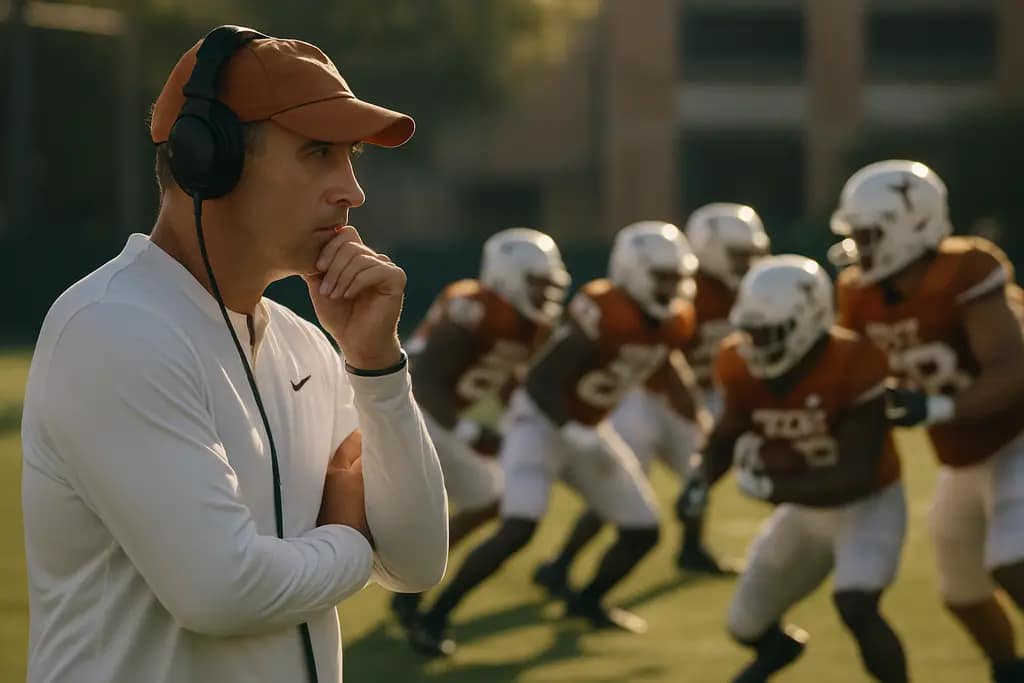
Texas Roster Updates have already moved from offseason talking point to live evaluation in Austin as of October 8, 2026. The Longhorns entered fall with a senior quarterback, targeted portal additions, returning line pieces, defensive holdovers and real special teams questions after veteran departures. For Texas fans who follow roster construction with the same eye baseball people use on pitching depth and player development, the key is not simply who arrived or left. The key is how those moves change weekly decision-making for Steve Sarkisian’s staff across the rest of the 2026 season.
Texas Roster Updates And The 2026 Baseline
Reading Texas Roster Updates Before SEC Media Days
The July 2026 roster housekeeping mattered because it gave a public look at how Texas was organizing its fall group before SEC Media Days. On3 reported several new jersey numbers for returning players and summer enrollees, including defensive back Nick Hudson at No. 36 and defensive lineman Elijah Ali at No. 55, along with the addition of walk-on wide receiver Evan Enderlin in its On3 roster update. Number changes do not decide games, but they often mark the point where spring competition becomes fall role definition.
That type of roster movement also speaks to how Texas is managing the middle of its depth chart. Starters draw most of the attention, yet conference play often stresses the next wave: fourth wide receivers, rotational defensive linemen, backup defensive backs and special teams contributors. If a walk-on receiver is added and young defenders are slotted into the roster before media days, the staff is not only filling out a sheet. It is setting up practice reps, coverage units and contingency plans for weeks when injuries, fatigue or matchup choices force more players onto the field.
The Austin Depth Question
The local angle matters because Texas football is not judged in isolation. Austin expects a roster built for SEC pressure, and the community reads depth as a sign of how well the program is developing talent beyond the headline recruits. That mirrors the way Texas baseball fans study fall scrimmage roles, bullpen pecking order and freshman readiness. The football version is more public, but the player-development question is similar: can the staff turn roster numbers into trustworthy game snaps?
This is where Texas Roster Updates connect directly to season dynamics. The Longhorns were not resetting from scratch, but they were not simply running back the same team either. The mix included a returning quarterback leader, returning offensive line pieces, new skill-position help, returning defensive linemen and defensive backs, and new pressure on specialists. That creates a roster with a strong top-end identity and a set of thinner areas that opponents can try to test.
How The Offense Changes Around Manning
Arch Manning As The Operating Point
Arch Manning’s 2025 production gives Texas the clearest point of offensive stability. He completed 248 of 404 passes for 3,163 yards, 26 touchdowns and seven interceptions across 13 games, while also rushing for 399 yards and 10 touchdowns, according to the official 2025 Texas statistics. Those numbers describe more than quarterback efficiency. They describe a player who can hold the structure of the offense together while the skill group changes around him.
Because Manning returned as a senior in 2026, Texas could build its passing and quarterback-run menu with a known decision-maker. That helps the offensive staff in two ways. First, it limits the amount of teaching that has to be centered on the quarterback position. Second, it allows new wide receivers and running backs to be evaluated through timing, spacing and trust rather than through a larger quarterback transition.
Skill Talent And Line Continuity
The January 2026 transfer additions of Cam Coleman at wide receiver from Auburn and Hollywood Smothers at running back from NC State gave Texas more experience at high-usage offensive positions. Their arrivals were especially relevant because the roster also dealt with departures at non-quarterback skill spots, including CJ Baxter at running back and DeAndre Moore Jr. at wide receiver. That exchange creates a different kind of competition: less about filling empty spots with freshmen alone, more about blending outside production with returning offensive language.
Up front, the research notes identify three returning starters on the offensive line, including Trevor Goosby, Connor Robertson and Brandon Baker. That continuity matters for Manning’s protection, but it also affects Smothers and the rest of the running back room. A line with returning starters can carry more checks, combo-block calls and protection adjustments than a fully rebuilt unit. For an offense trying to merge transfer playmakers with an established quarterback, that is a practical advantage.
There is still a teaching curve. A receiver can arrive with talent and still need time to match route detail, option rules and Manning’s timing. A running back can bring explosiveness and still need to handle pass protection against SEC fronts. Texas Roster Updates gave the offense options, but the value of those options depends on how quickly those players became dependable in the smaller parts of the job.
Defensive Continuity Against Roster Turnover
The Front Still Has Anchors
Texas entered the fall with returning defensive line pieces identified in the research notes, including senior Hero Kanu and junior Alex January. That matters because defensive line continuity can soften roster losses elsewhere. A front that can hold gaps, reduce double teams and create pressure without constant blitz help allows the secondary to play with cleaner rules.
The Longhorns also had to balance that stability against broader departures after the 2025 season, including players who moved on through eligibility or NFL opportunities. That is the normal cost of a high-end program, but it still changes practice math. Young linemen need meaningful reps. Rotational defenders need to prove they can survive long drives. Coaches need to decide whether to lean on veterans for steadier early-down work or expand the rotation to keep the front fresh later in games.
Secondary Experience Helps The Teaching Plan
The return of defensive backs such as Jelani McDonald, Bo Mascoe and Graceson Littleton, as listed in the research notes, gives Texas more continuity behind the front. That helps because coverage communication is often where roster turnover shows up fastest. One busted switch, one slow safety rotation or one corner failing to pass off a route can flip a defensive series.
Veteran defensive backs also help coaches accelerate younger players. If freshmen and transfers are being worked into coverage packages, they benefit from hearing calls and adjustments from players who have already lived through Texas practice standards. In a conference setting, that can be the difference between a young defender being protected with a limited package and being trusted in a full defensive call sheet.
The linebacker additions named in the research notes, including Rasheem Biles and Justin Cryer, fit that same developmental theme. Linebacker is a communication position, not just a tackling position. If Texas can turn that group into a reliable bridge between the line and secondary, the defense has a better chance to absorb personnel change without losing shape.
Special Teams And Transfer Balance
Replacing Veteran Specialists
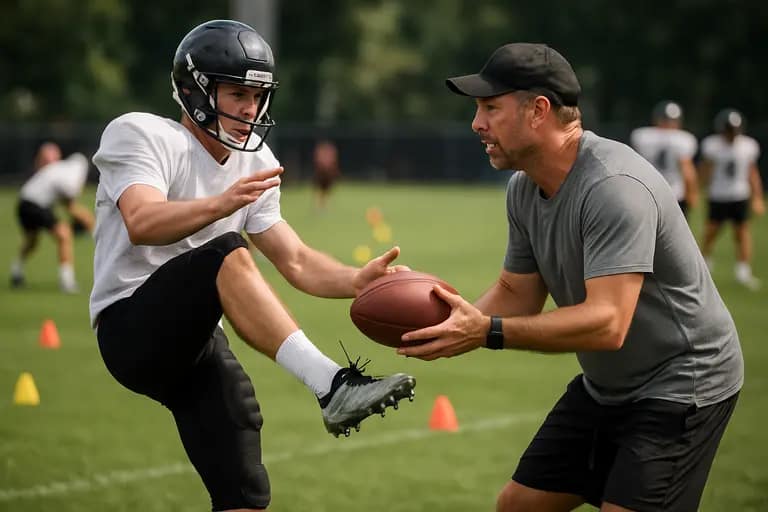
Special teams may be the least glamorous part of the roster update, but it is one of the most direct paths from offseason change to fall results. The research notes identify kicker Mason Shipley and punter Jack Bouwmeester as no longer available after signing with NFL teams following the 2025 season. Losing veteran specialists changes field position, fourth-down choices and late-half planning.
A new kicker or punter does not have to be perfect to keep Texas stable. He does need to make routine operations feel routine: clean field goals, consistent extra points, controlled punts and solid execution under pressure. Coaches can hide inexperience at some spots by using packages. Specialist uncertainty is harder to mask because the moment is isolated and public.
Portal Movement As A Staff Test
The broader transfer movement around Texas places the staff in a familiar modern college football spot. It must evaluate incoming talent, hold returning players accountable and avoid turning depth into a weekly guessing game. That is why the site’s prior discussion of Texas transfer strategy fits this football roster conversation: roster building is no longer a winter-only project, and player development has to continue after the portal headlines fade.
For the 2026 Longhorns, the transfer class added offensive skill help and linebacker options, while departures created chances for younger players such as Jermaine Bishop Jr., Kade Phillips and others named in the research notes. That creates a healthy but demanding setup. If the young players grow into playable depth, Texas can keep starters fresher and adjust to injuries. If that group remains uneven, the staff may have to shorten the rotation and accept more fatigue risk as the season moves deeper into conference play.
Why Texas Roster Updates Matter In Austin
What The Roster Says About The Rest Of Fall
The practical meaning of Texas Roster Updates is that the Longhorns have a roster built around a proven senior quarterback and enough returning structure to avoid a full reset. Manning’s 2025 production gives the offense a clear center. Returning offensive line starters give that center a base. Defensive returners such as Kanu, January and the veteran defensive backs give the other side of the ball a foundation.
The concerns are just as clear. Special teams turnover has to be managed. Transfer skill talent has to mesh with established offensive timing. Younger receivers, linebackers and defensive backs need to become more than roster names. Those are not abstract questions for Austin. They shape field position, third-down calls, red-zone choices, practice priorities and the confidence level of a fan base that expects Texas to look prepared every week.
For a community that tracks Longhorns football closely, the roster update is best read as a map of pressure points. Texas has star power and continuity in the right places, but the 2026 season will keep testing whether the staff can turn depth into usable roles. That is the difference between a talented roster and a dependable one.